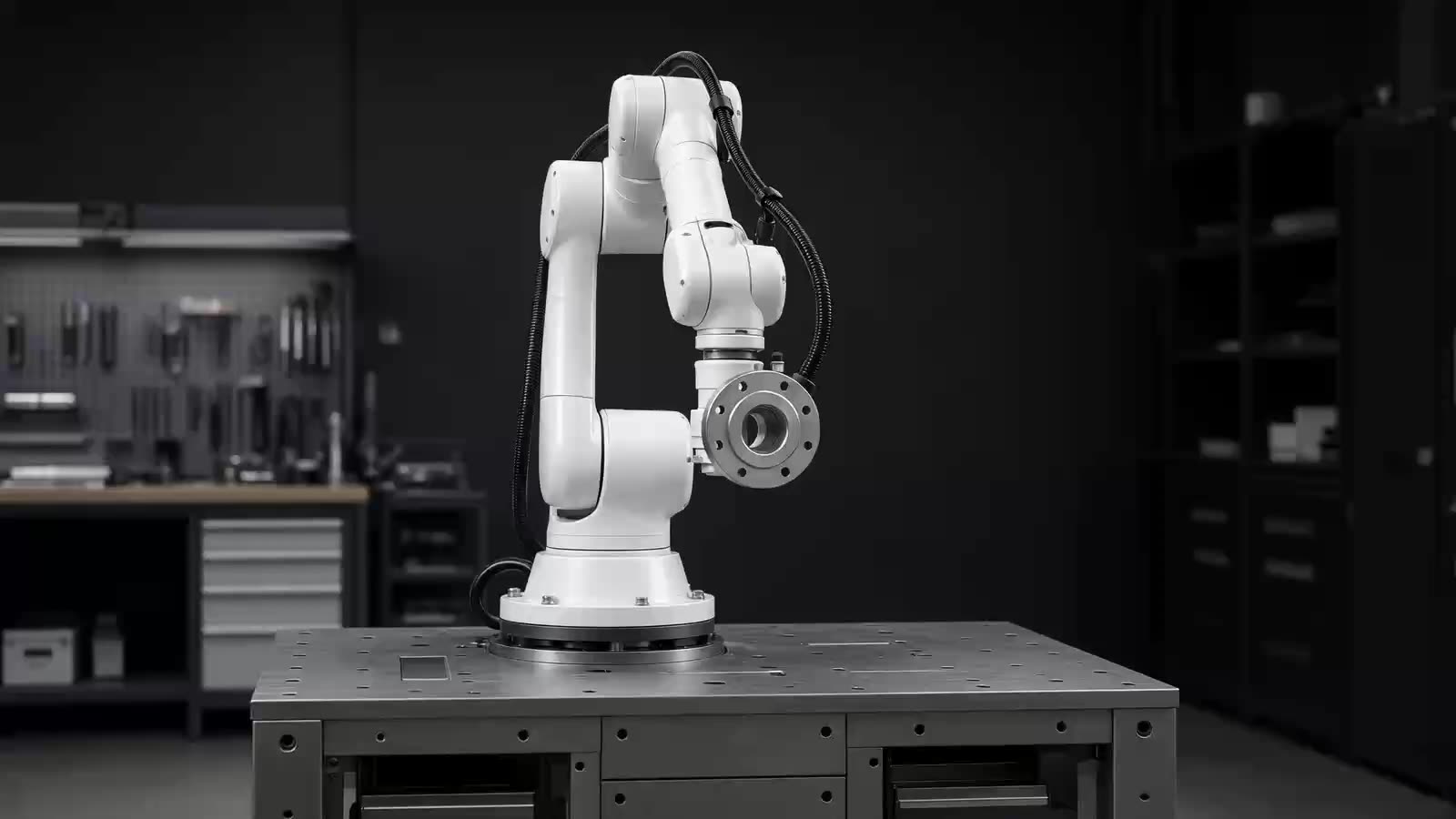
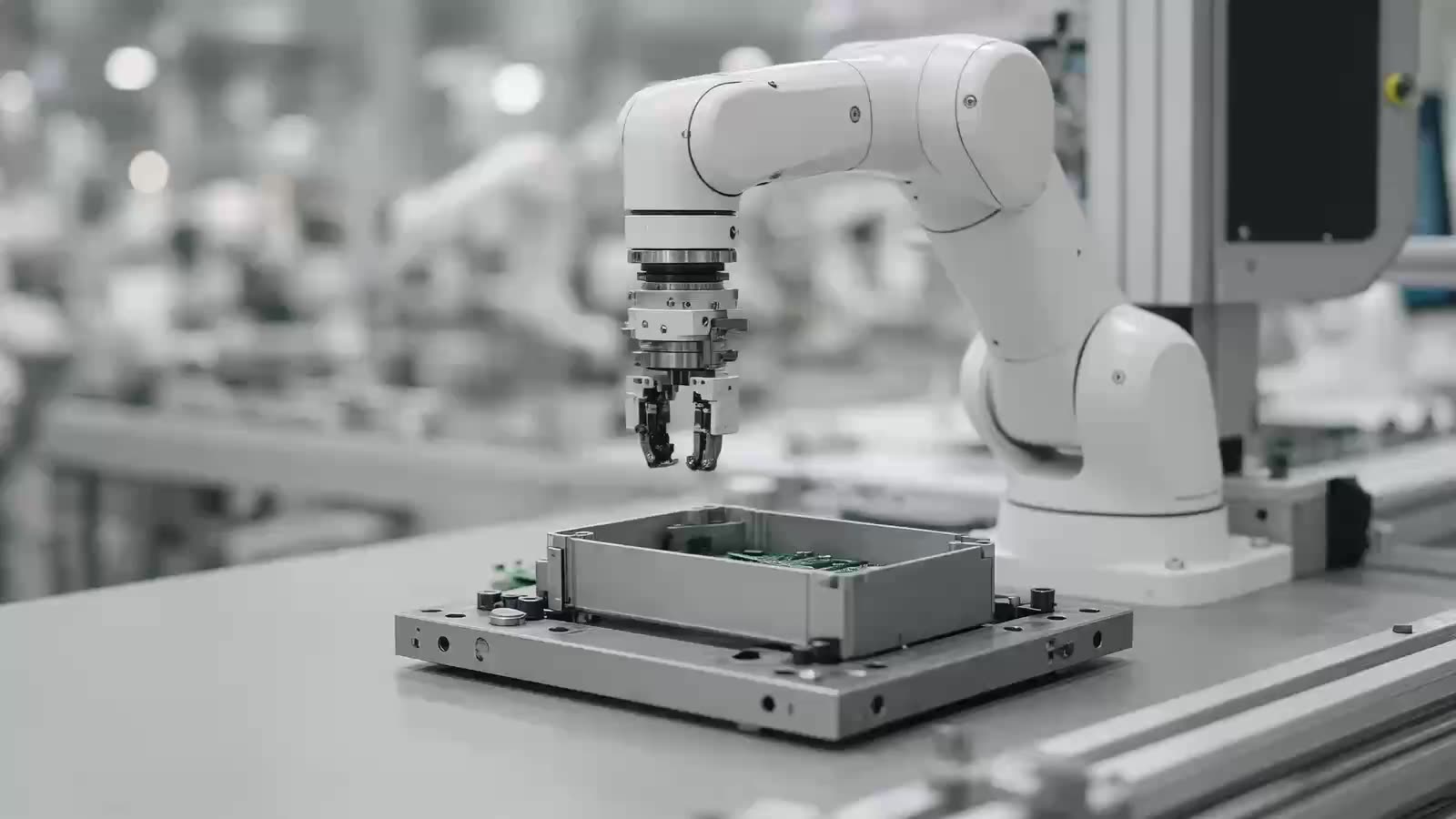
Robots are expensive to teach. A new task means data collection, training time and an integration project, and a new machine means doing much of it again. MA Reflex removes most of that loop.
The robot sets itself up
Connect a robot arm nobody described and MA Reflex works out its own body: joints, units, tool frame and gripper stroke. Measured in simulation, on simulated models of three commercial arms, it took 193 to 296 seconds of robot time, inside a five-minute budget.
Show it once
Demonstrate the job a single time and MA Reflex can practice and repeat it. Nothing is trained. In simulation, a job shown on one arm was carried out by a different arm at 30 new layouts per pair of arms: 270 of 270 placed, zero retries, median error between 0.57 and 2.45 mm.
- placements on a second arm, in simulation
- 270 / 270
- success with objects moved, from 66%, on a simulation benchmark
- 79%
- fewer policy calls per episode, on the same benchmark
- 2.4×
Better together with your policy
Vision-language-action policies bring broad capability. MA Reflex brings precision on the job it was shown. Sharing the work phase by phase across forty tasks on a simulation benchmark, success with objects moved rose from 66% to 79%, and from 39% to 65% with the object 21 cm away, while the policy was asked 13.4 times per episode instead of 32.8.
All of it runs on a CPU at the edge, behind a safety gate that commits, defers or refuses every action. Show it once. It does the job.